Siemens Unveils Breakthrough in Automation Technology with New Simatic Workstation
May 15, 2024
- Workstation provides with software-defined automation unprecedented control over factory automation and security
- At Automate 2024, Siemens highlights how co-creator Ford Motor Company will be the first customer to deploy and scale this technology in its manufacturing operations
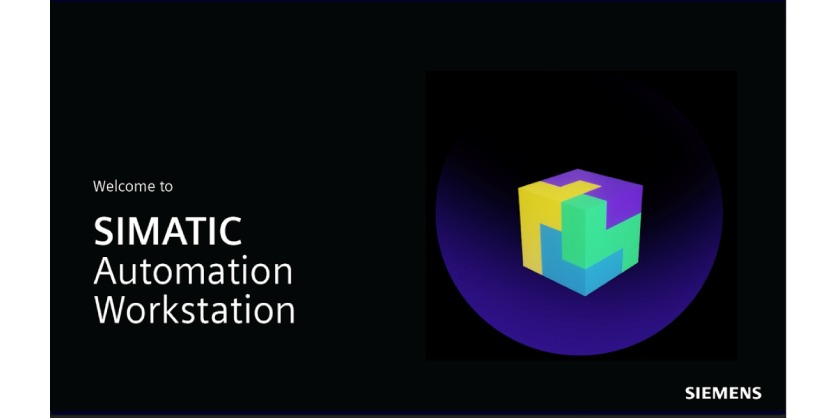
Siemens, a leading technology company, has announced a breakthrough in the longstanding challenge of closely managing numerous hardware control points throughout the factory. The solution is the new Siemens Simatic Automation Workstation, which allows manufacturers to replace a hardware PLC, a conventional HMI and an edge device with a single, software-based workstation. This ushers in Information Technology (IT) workflows to Operational Technology (OT) environments.
PLCs are often referred to as the brains behind factories, energy grids, office buildings, and trains. Hundreds, even thousands, of these boxes can be found throughout plants, each one requiring extensive programming to keep it current, secure and aligned with the other PLCs in the environment.
On the contrary, every Siemens Simatic Workstation can be viewed and managed from a central point. Since programming, updates and patches can be deployed to the entire fleet in parallel, the shop floor remains in synch. One example of the value this brings occurs when a facility needs to ramp up or down quickly in response to fluctuating demand. The manufacturer is no longer tied to boxes on the floor and can quickly deploy programming adapted to the current demand scenario.
The Siemens Simatic Workstation is an on-premise OT device that utilizes Siemens industrial edge technology to allow for high data throughput with the low latency needed to allow manufacturers to run an expanded variety of modular applications. This applies not only to traditional automation tasks like motion control, sequencing, and safety, but it becomes the platform for future, novel automation tasks that incorporate industrial AI-in-the-control-loop, such as visual inspection and robotic grasping and placing.
“In times of volatility in demand and supply, manufacturers can no longer be tied to boxes on the floor that need to be individually – and manually – updated. Centralized management is the best option for increasing visibility and security for manufacturers managing a high number of automation control points,” said Del Costy, President and Managing Director of Siemens Digital Industries, USA. “This makes automation highly scalable and changes the game for how factories can be managed. We have arrived at a moment where we are only limited by our imaginations.”
The initial deployment of Simatic Workstations will be deployed across a number of Ford Motor Company’s manufacturing facilities. The Simatic Workstation is the newest addition to the digital business platform Siemens Xcelerator and will be adapted to serve other industries and customers.
More Information
Related Story
Siemens Xcelerator: New Siemens Software Automatically Identifies Vulnerable Production Assets
Production facilities are increasingly the targets of cyberattacks. Industrial companies are therefore required to identify and close potential vulnerabilities in their systems. To address the need to identify cybersecurity vulnerabilities on the shop floor as quickly as possible, Siemens has launched a new cybersecurity software-as-a-service.