Learning While Welding: Weidmüller is Developing an Industrial Analytics Tool to Monitor Friction Stir Welding Processes
October 15, 2025
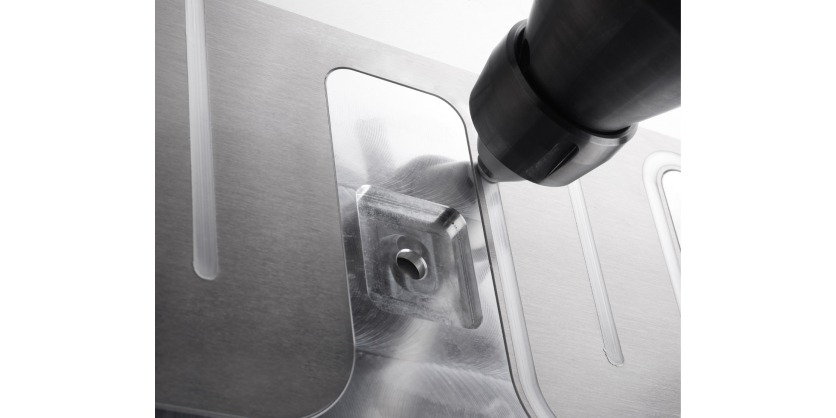
The internationally operating Grenzebach Group and the electrical engineering and automation company Weidmüller are working together in the fields of data analysis and predictive maintenance. Their research focuses on condition and quality monitoring for friction stir welding technology. Customised analysis software from Weidmüller is used to monitor the welding process. In the future, it will be able to automatically detect and record anomalies in the welding process.
Innovative technology
Friction stir welding is a form of pressure welding. The joint is not melted; instead, enormous pressure and a rotating tool heat the material during the welding process, making it plastically deformable. At the same time, the tool pin rotates, stirring the components to be joined. The process can be used to join light metals like aluminium, ensuring secure, heat-resistant, long-lasting bonds.
The welding joints created are among the most stable of any welding method. Friction stir welding is therefore mostly used for electromobility components and in critical sectors, such as aerospace. The process creates joints that would otherwise be impossible with the use of other welding technologies. Another advantage of the technology is that it does not generate smoke, sparks or toxic gases.
Dual monitoring for greater quality
The Grenzebach Group supplies systems for this welding process. In order to support its customers’ quality control processes, the company is expanding the technology to include “AutoML”, Weidmüller’s industrial analytics tool. This adds a data-driven approach to complement conventional inspections of welded parts, thereby increasing the weld quality. “We want our customers to manufacture products with the best possible quality and keep abreast of any deviations early on”, explains Christian Herfert, Senior Vice President Special Technologies at Grenzebach.
Industrial AutoML records and analyses sensor data during the welding process. This includes, for example, the mechanical forces applied to the tool. The analytics tool combines the data and processes it further. After teaching the tool through hundreds of standard welds, the system creates models that are capable of detecting welding deviations automatically. “Our software compares the measured values with the trained welds. If the software detects a deviation from the defined parameters, the operator knows that something is wrong”, explains Dr Daniel Kress, Data Scientist at Weidmüller.
Grenzebach uses numerical labelling to assign a brand to each dataset. This data is forwarded to Industrial AutoML so that customers can view and track the quality of each workpiece individually. The reliable documentation of deviations increases transparency for customers.
The number of specialists in this new technology is still limited. Grenzebach employees working in this field can now expect to receive comprehensive support. Defects that cannot be discerned with the naked eye are detected by the software. These can be specifically taken into account in the workpiece control process, which increases product quality. And the additional documentation provided by Industrial AutoML doubles the level of security for Grenzebach customers.
A partnership for more customer benefits
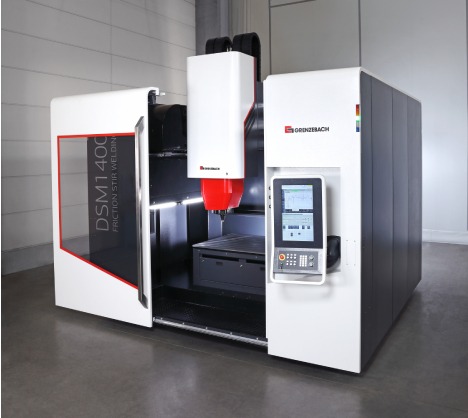
The Grenzebach Group and Weidmüller are working together to give customers of the welding machine manufacturer all the benefits of simplified processes. In addition to the improved documentation of welding processes, Industrial AutoML also enables reliable predictive maintenance. The generated data can then be used to create machine learning paradigms that detect critical measurements and energy-intensive processes completely automatically. In a downstream operation, these can be further developed to aid sustainable production based on the user’s requirements or used as an ML solution to support quality specialists.
Grenzebach is thus optimising its machines and upgrading them in line with the increased demands placed on modern systems. In this way, the company can not only ensure high manufacturing quality, but also simplify interactions between the system operator and the system. Customers now stand to gain added value from their production data, even without a data scientist.
Weidmüller offers a wealth of products and solutions for industrial IoT and automation. “As an ‘enabler from data to value’, it is important to us to help our customers get added value from their data for themselves and their company”, explains Dr Thomas Bürger, Head of the Automation Products and Solutions Division at Weidmüller. Weidmüller provides its customers with innovative concepts for data collection, pre-processing, analysis and visualisation.
More Information
Related Story
A Milestone in Connectivity for Weidmüller – Made in Germany
Weidmüller, a leading provider of industrial connectivity and inventor of the plastic-based terminal block, is looking forward to two major milestones: celebrating 175 years of company history, and 40 years of the W terminal block family. Since it was invented, the W-Series has been setting standards in electrical connectivity with its design and quality. Screw-type terminals from Weidmüller are considered synonymous with durability and reliability, and help ensure more efficient and safe electrical connections worldwide.