Yaskawa Motoman: High-speed MPX1400 Robot Adds Versatility to the MPX-Series Line
September 15, 2021
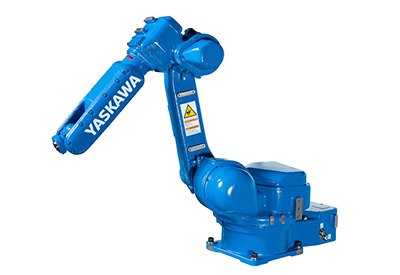
Extremely fast and robust, the six-axis MPX1400 robot has been added to Yaskawa Motoman’s MPX-series paint robot line. Optimized to create smooth, consistent finishes, this model is well-suited for a variety of dispensing and coating applications.
Proven effective for painting multiple small parts simultaneously, the highly efficient MPX1400 robot is ideal for home appliances and automotive parts, including instrument panels and headlamp assemblies. A straight wrist with a 5 kg payload capacity enables the mounting of a variety of spray guns and small bells, and a small footprint slim-arm design allows for minimum installation space. The MPX1400 robot features a 1,256 mm horizontal reach, 1,852 vertical reach and a ±0.14 mm repeatability.
This model offers a reduced interference work envelope and can be installed close to workpieces for efficient use of floorspace. It can be floor-, wall- or ceiling-mounted for layout flexibility.
The MPX1400 and DX200-FM controller feature Factory Mutual (FM) approval for use in Class I, Division 1 hazardous environments. An intrinsically safe pendant is available as an option.
The DX200-FM controller includes application-specific software for paint applications and coordinates operation of the robot and painting devices, including spray gun, color changer and gear pump.The controller supports standard networks (EtherNet, EtherNet IP, CC-Link and DeviceNet), enabling connection to paint equipment controllers and production line controllers.
The DX200-FM is available with Category 3 Performance Level d (PLd) Functional Safety Unit (FSU), which supports safety-rated speed control, safety-rated soft axis and space limiting, and safety-rated monitor stop. In addition to enabling safe operation in smaller spray booths with adjacent manual operations, these safety functions can be utilized to save costs and reduce floorspace requirements.