Festo’s VTSA-F-CB Valve Terminal Provides More Communications, Greater Safety
November 26, 2020

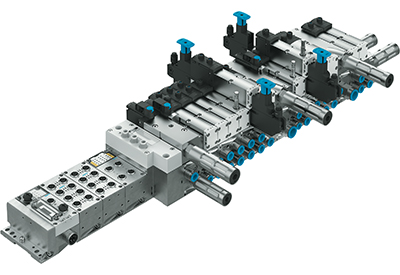
Festo’s heavy duty VTSA series valve terminal family keeps expanding – this time, it’s the VTSA-F-CB, with serial communications added to the existing parallel communications capability. That means fewer components and reduced wiring within the same installation space. In addition, the VTSA-F-CB’s internal bus system allows users to actuate up to 96 valve addresses, instead of the usual 32, and in four zones, on just the one valve terminal and one fieldbus node.

The VTSA series is Festo’s most flexible valve terminal concept, widely used in medium and heavy industry. It’s capable of handling many ISO sizes or high flow valves. With the VTSA-F-CB, it is possible to freely mix 18 mm and 26 mm valves on the same manifold, reducing size and cost of the manifold.

VTSA-F-CB features four different CPX/pneumatic interfaces for maximum integration flexibility: A basic interface when safety control is not required, two integrated PROFIsafe versions (one to control three safe valve zones, another to control two zones with one safe output), and the last version that makes it possible for an external safety fieldbus module to directly control three pneumatic safety zones. The VTSA-F-CB configuration options include a pilot air switching valve, for applications where increased safety is required like manual work stations, and a safety soft start/quick exhaust valve for slow start-up to operational pressurization in a safe and controlled manner. And the new vacuum generator VTSA-F-CB has an air saving feature with ejector pulse. When the correct vacuum level is achieved the generator will automatically turn off.  Extensive diagnostics and parametrization of setpoints are possible.

For more information, visit www.festo.com.
Related Articles


Latest Articles

  • What Is Regenerative Braking?

    December 9, 2025 Regenerative braking is a system that converts kinetic energy – normally lost as heat during braking – into electrical energy that can be stored or reused. Instead of using friction brakes to dissipate energy, the motor functions as a generator during deceleration, reversing the flow of current. The rotational energy from the… Read More…

  • Cyber Resilience Act: Insights from Pilz

    December 4, 2025 The Cyber Resilience Act brings with it a host of new requirements. Which requirements will apply in future? From 11 December 2027, only products that comply with the requirements of the Cyber Resilience Act (CRA) may be placed on the market within the European Union. The CRA contains requirements for the cybersecurity of… Read More…


Featured Article

Revolutionizing Material Movement with Autonomous Mobile Robots

Revolutionizing Material Movement with Autonomous Mobile Robots

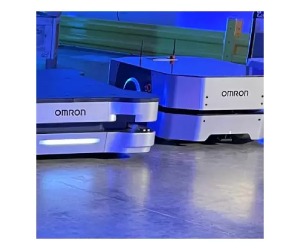
In today’s fast-paced manufacturing and logistics industries, the need for efficient and flexible material movement solutions has never been greater. Traditional methods like conveyor systems, forklifts, and manual pushcarts have served us well, but they come with limitations.

That’s why Omron is thrilled to announce the launch of their game-changing MD Series of Autonomous Mobile Robots (AMRs). Read more


Products

  • Schneider Electric Debuts One Digital Grid Platform to Help Utilities Modernize and Address Energy Costs

    December 12, 2025 Schneider Electric, a global energy technology leader, announced the availability of its One Digital Grid Platform, a unified, artificial intelligence AI-enabled software platform designed to help utilities modernize faster, strengthen grid resilience and reduce energy costs. The platform was launched simultaneously in Spain at Enlit Europe, attended by more than 15,000 professionals from… Read More…

  • A One-Stop Shop: Pilz Machine Acceptance Service

    December 10, 2025 Design Risk Assessment, Factory Acceptance Test and Site Acceptance Test Key phases of the design, manufacture and supply of plant and machinery are based on different legal and normative requirements. For this reason, it is important that all legal requirements are met at these points, before the plant/machinery is transferred to the next phase. The legal provisions vary from country… Read More…