Smart Electrification is Paying Off: How Schneider Electric Canada is Balancing the Scales
December 18, 2025
Questions created by Krystie Johnston, Managing Editor at Kerrwil Media Ltd.
Answers to be attributed to Nick Rinaldi, Director of Business Development – Home Builders, Schneider Electric Canada
Canada’s housing market is demanding smarter, more sustainable solutions, and Schneider Electric Canada is helping to lead this transformation. Their innovative residential technologies make homes more energy efficient and ready for the future. At the same time, they are supporting home builders to navigate the affordability crisis, energy code compliance, and consumer demand for modern homes. In this Q&A, Nick Renaldi, Director of Business Development – Home Builders at Schneider Electric Canada, shares his insights on the topic.
1. Can you start by telling us a bit about yourself and what you do at Schneider Electric Canada?
My name is Nick Rinaldi, and I’m the Director of Business Development for the Home Builders segment at Schneider Electric Canada, a global leader in energy technology and digital automation. My role is to work closely with builders, developers, and industry partners to integrate smart, sustainable technologies into Canadian homes. I have over two decades of experience in business development and residential solutions. At Schneider Electric, I focus on helping builders bring smarter, more sustainable technologies into Canadian homes, ensuring they meet evolving energy codes and deliver houses that are affordable today while ready for tomorrow’s demands such as EV charging, automation, and grid resilience.
2. Why is the housing industry undergoing a transformation? What would you describe is changing? And how close to the end of this transformation would you say we are?
Canada’s housing industry is being reshaped by affordability pressures and sustainability goals. The national average home price is around $679,600 as of October 2025, though prices are significantly higher in provinces such as Ontario and British Columbia. At the same time, energy costs remain a meaningful burden for households. Canadians spend a notable share of their income on utilities each year (Fraser Institute, Energy Costs and Canadian Households, 2025). Stricter building codes and Canada’s net‑zero commitments are also pushing builders to rethink how homes are designed.

We’re seeing a clear shift toward electrification, smart load management, and energy‑efficient retrofits. For example, Canada has installed more than 271,000 new heat pumps since 2020 (Natural Resources Canada, 2025), helping households cut costs and emissions.
This isn’t a short‑term trend; it’s part of a long‑term transformation driven by climate goals and affordability pressures.
I’d say we’re still in the early‑to‑middle stages of this journey. Builders are adopting new technologies, but widespread integration of smart energy solutions across all regions will take time.
3. How is Scheider Electric helping to lead this transformation? What products and/or services are they offering?
Schneider Electric is helping builders future‑proof homes with solutions that simplify energy management and compliance.
- QO™ smart panel solution: This solution enables circuit‑level monitoring and control, making it easier to manage loads like EV chargers, HVAC systems, and other high‑demand appliances. It gives homeowners visibility into their energy use while helping builders deliver homes that are ready for modern technologies.
- Service Upgrade Avoidance (SUA): One of the biggest benefits for builders is avoiding costly service upgrades. By installing an energy management system (EMS) that controls specific loads, builders can keep homes on a 100A panel instead of upgrading to 200A. For example, if an EV charger pushes the load calculation beyond the 100A limit, an EMS allows that load to be managed separately, avoiding the expense of rewiring back to the utility or upgrading transformers. This saves builders significant costs while still meeting code requirements. (Note: under the current Canadian Electrical Code, only EV loads can be discounted from the calculation, not other loads like hot tubs or saunas.)
- Whole‑Home Surge Protection Devices (SPDs): These safeguard appliances and electronics from power surges, reducing costly damage. For homeowners, SPDs can also lower insurance risks and claims, since they protect against electrical events that often lead to expensive replacements (SE FAQ, 2025).
- Schneider Energy Monitor: Provides homeowners with real‑time insights into consumption, helping them identify savings opportunities and reduce bills. According to Schneider Electric’s 2022 survey, 71 per cent of Canadian homeowners expressed interest in monitoring systems to help manage rising energy costs.
Together, these solutions help builders deliver homes that are not only compliant with evolving codes but also competitive in a market where smart‑ready features are becoming the norm.
4. Can you share two or three concrete examples or real-world case studies that demonstrate how smart technologies – like the ones from Schneider – are delivering measurable impact for homeowners? And can you extrapolate and provide insights into how this is having a positive impact on the planet?
We’re seeing smart electrification deliver tangible results for Canadian homeowners and builders:
- Smart Panels & EV Integration: Builders using the QO™ smart panel solution have successfully future-proofed homes for electric vehicle adoption. With zero-emission vehicles accounting for 15 per cent of new registrations in Canada in 2024, the ability to manage EV charging loads without overburdening the grid is critical. Smart panels allow homeowners to schedule charging during off-peak hours, reducing costs and easing strain on utilities.
- Surge Protection & Reliability: In regions with frequent power fluctuations, Schneider’s whole-home surge protection devices have prevented thousands of dollars in damage to appliances and electronics. For homeowners, SPDs also reduce insurance risks by protecting against electrical events that often lead to costly claims (Schneider Electric FAQ, 2025).
- Energy Monitoring & Savings: In projects where Schneider Energy Monitor has been deployed, homeowners gained real‑time visibility into their consumption, helping them identify high‑demand appliances and adjust usage patterns.
From a planetary perspective, these technologies contribute to Canada’s 2050 net‑zero targets by lowering household emissions and reducing peak demand. Widespread adoption of smart load management could cut millions of tonnes of CO₂ annually, supporting a more resilient energy system nationwide.
5. What else do you want people to know about Schnieder Electric or these topics we have touched on?
I’d emphasize that Schneider Electric is more than a product provider – we’re a trusted energy technology partner to builders navigating affordability and sustainability challenges. We’re helping the industry deliver homes that are safe, sustainable, and smart‑ready, with solutions that simplify energy management and compliance.
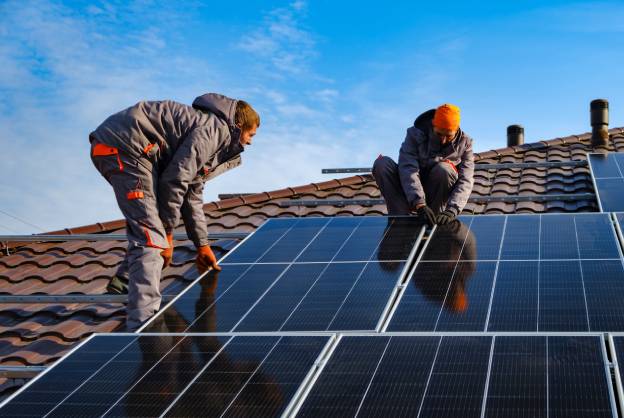
Recent research underscores how aligned this is with Canadian expectations. According to a 2024 Nanos survey commissioned by Schneider Electric, 85 per cent of Canadians are open or somewhat open to installing renewable energy devices in their homes, and a majority recognize the importance of electrification in meeting Canada’s net‑zero goals. This shows that homeowners are not only aware of smart and sustainable technologies, but increasingly receptive to integrating them into their daily lives.
What sets Schneider Electric apart is our ability to simplify complex energy challenges for builders while giving homeowners confidence that their homes are future‑proofed for EVs, automation, and evolving energy codes. Ultimately, smart electrification isn’t just paying off for homeowners but it’s helping balance the scales for the housing industry and contributing to Canada’s broader 2050 net‑zero targets.
More Information
Related Story
Schneider Electric Is Named a Leader in the IDC MarketScape for Worldwide Energy Transition Professional Services
As organizations accelerate their shift toward low-carbon, resilient energy systems, IDC MarketScape has recognized Schneider Electric as a leader in Worldwide Energy Transition Professional Services 2025.
The evaluation assessed professional service providers globally on their capabilities and strategies to help energy-intensive industries achieve net-zero goals, and this recognition affirms Schneider Electric’s position as a trusted partner for organizations navigating the shift to sustainable energy systems.