Four Tips for Designing Tamper-Evident Late-Stage Customization Solutions
PBUS-28-Omron-TamperEvidentCustomization-400.jpg

June 29, 2021

Serialization legislation is requiring pharmaceutical manufacturers to ensure that labels printed at a late stage contain all data necessary for compliance. Since many product labels are customized by markets, customer, or product type, adding variable data to labels or packaging is a way to avoid stocking individual packaging materials for each variant.

The flexible production of smaller batch sizes has also introduced new requirements for automatic and fast changeovers. If you’re a pharma manufacturer, how can you implement a flexible, tamper-evident solution for late-stage customization in low- and medium-volume production?

Fortunately, late-stage customization can be an opportunity for finding a solution that handles both serialization and the production of small batch sizes without any loss of operational effectiveness. Let’s take a look at the best way to do this.

1. Combine manual feeding with robotics and other automated tasks.

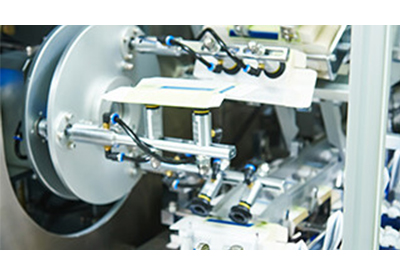
When building a flexible serialization station, it’s a good idea to find a way to seamlessly combine manual feeding, robotics, printing and sealing. Once products are fed manually, the robotic technologies can automatically separate and transfer them to the print head for customization via variable data, such as product codes, serial number and lot number.

2. Load master data from the serialization database or ERP system.

You can prepare orders and load the master data from the serialization database or ERP system. Set-up can be carried out via a menu, including the loading of variable data print profile and the position of the tamper-evident seal, which is applied to the carton by a robot.

3. Employ robot-guided machine vision for label inspection.

The station can include a robot-guided machine vision system to checks label presence and print quality and also validate text and the DataMatrix code. The system will reject products with poor print quality, incorrect printing, or insufficient seals.

4. Take advantage of state-of-the-art touchscreen technology.

The serialization station can include product weighing and can be operated via a large, intuitive industrial touchscreen. It can generate all the reports, including a production report, error reports, the status of the serial numbers used, and an Audit Trail Report. A full audit trail, which is part of the regulatory requirements, assures record integrity and security.

Source

Related Articles


Latest Articles

  • Cyber Resilience Act: Insights from Pilz

    December 4, 2025 The Cyber Resilience Act brings with it a host of new requirements. Which requirements will apply in future? From 11 December 2027, only products that comply with the requirements of the Cyber Resilience Act (CRA) may be placed on the market within the European Union. The CRA contains requirements for the cybersecurity of… Read More…

  • Vention’s Demo Day 2026 Highlights Zero Shot Automation™ – Automating Automation

    December 3, 2025 By Krystie Johnston Vention has been democratizing automation since 2017, and their 6th annual Demo Day demonstrated another step on that journey. For those unfamiliar with Vention, they are headquartered in Quebec and describe themselves as the creator of the world’s only AI-powered full-stack software and hardware automation platform. For those who… Read More…


Featured Article

Revolutionizing Material Movement with Autonomous Mobile Robots

Revolutionizing Material Movement with Autonomous Mobile Robots

In today’s fast-paced manufacturing and logistics industries, the need for efficient and flexible material movement solutions has never been greater. Traditional methods like conveyor systems, forklifts, and manual pushcarts have served us well, but they come with limitations.

That’s why Omron is thrilled to announce the launch of their game-changing MD Series of Autonomous Mobile Robots (AMRs). Read more


Products

  • Festo’s New Hygienic Adaptive Gripper Revolutionizes Workflows in Food, Pharma, Cosmetic Industries

    December 5, 2025 The Festo HPSX universal adaptive gripper is a groundbreaking hygienic soft gripper engineered to handle delicate, irregularly shaped, and hygienically sensitive products. Gripper fingers are produced from a soft silicone-based material, making them ideal for items that are easily damaged. HPSX can perform multiple picks per second. The design of this pneumatic gripper is a… Read More…

  • STUDSON Introduces HighBar-Equipped SHK-1, A New Approach to Helmet Fit

    December 5, 2025 Mono-Chinstrap System Provides Another Fit Option for Workers Who Prefer a Simpler, Cleaner Alternative to Four-Point Nylon Buckle Systems STUDSON, an above-the-neck safety innovator, has announced the general availability of the HighBar-Equipped STUDSON SHK-1 Type II safety helmet, featuring the revolutionary buckle-free HighBar safety system with a single, stowable chinstrap. After introducing the concept version last year,… Read More…