CNL Granted Licence Amendment for Chalk River Laboratories to Authorize Construction of an NSDF
March 11, 2024
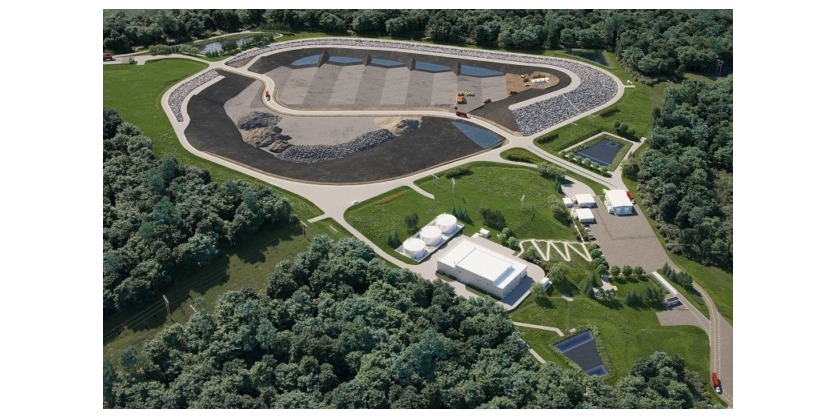
Canadian Nuclear Laboratories (CNL) to construct a near surface disposal facility (NSDF) on the site
In January 2024, the Canadian Nuclear Safety Commission (CNSC) announced the Commission’s decision to amend the licence for Chalk River Laboratories, authorizing Canadian Nuclear Laboratories (CNL) to construct a near surface disposal facility (NSDF) on the site.
The Commission made the decision to amend the licence after reaching three separate conclusions, including that the NSDF Project is not likely to cause significant adverse effects, with the implementation of all CNL-proposed mitigation measures and follow-up monitoring. The Commission assessed the safety case for the facility as robust and indicative of the NSDF meeting its required design life of more than 500 years.
This decision is the result of a rigorous regulatory review process, including a federal environmental assessment under the Canadian Environmental Assessment Act 2012, that began in 2016 and involved Indigenous and public participation throughout. The licence amendment includes the requirement for ongoing engagement with Indigenous nations and communities and with the public.
The Commission also determined that the duty to consult with Indigenous nations and communities had been met, and that CNL is qualified to carry out the licenced activity and will make adequate provision for the protection of the environment and human health. In response to questions raised during the hearing process, the Commission found in its decision that the design and site selection are aligned with the standards of the International Atomic Energy Agency.
CNL is aware that applications have been filed for a judicial review of the CNSC’s decision to approve construction of the NSDF. We remain fully committed to ensuring the safe management of these historic waste liabilities and operational wastes now and for the long term.
Background:
The regulatory review process for the NSDF Project was launched in 2016. CNL has been engaging with Indigenous Nations and communities and with the public throughout the process and will continue to do so during construction and the planned operation of the facility.
Following a two-part public hearing in 2022 and a further oral presentation in 2023 on CNL’s application to amend the licence to construct an NSDF, the Commission issued its decision on January 8, 2024.
CNL is dedicated to ensuring that its commitments made to Indigenous nations and communities and the public are fulfilled prior to and during construction, operation and closure of the facility.
Related Story
United Kingdom Atomic Energy Authority and Canadian Nuclear Laboratories Partner to Accelerate Fusion Energy Development
The United Kingdom Atomic Energy Authority (UKAEA) and Canadian Nuclear Laboratories (CNL), have signed a collaboration framework agreement to partner on the development of technologies in relation to the management of tritium, a fusion energy fuel.