Mobile Robot Safe Drives Market to Reach $7.9 Billion by 2033
December 3, 2025
Market Summary:
According to Research intelo,The Global Mobile Robot Safe Drives market size was valued at $2.1 billion in 2024 and is projected to reach $7.9 billion by 2033, expanding at a robust CAGR of 15.2% during the forecast period of 2025–2033. The primary growth driver for the Mobile Robot Safe Drives market globally is the increasing demand for automation and safety in industrial and logistics operations, where mobile robots are playing a pivotal role in enhancing operational efficiency and reducing workplace accidents. As industries across manufacturing, healthcare, logistics, and defense seek to modernize their workflows and comply with stringent safety standards, the adoption of advanced safe drive systems for mobile robots is accelerating rapidly. These systems ensure not only efficient robot navigation but also reliable obstacle detection and avoidance, supporting both productivity and regulatory compliance.
Introduction: Why Safe Drives Matter Now
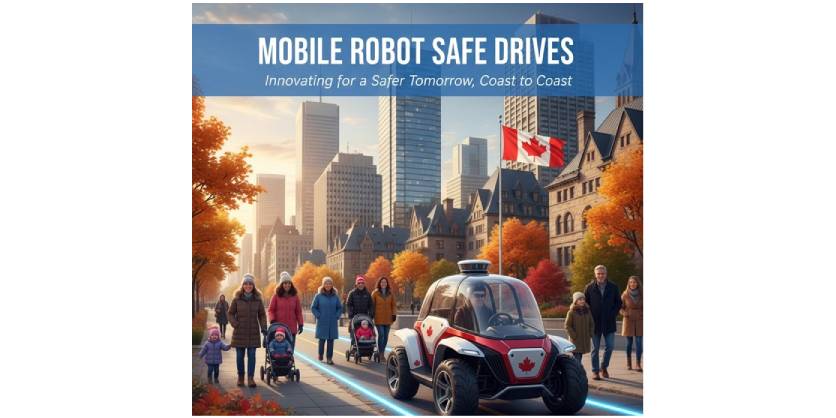
Mobile robots are no longer futuristic devices in labs they’re becoming essential tools in Canadian warehouses, hospitals, farms, and manufacturing plants. As their adoption accelerates, one technology is emerging as the backbone of safe robot operation: mobile robot safe drives.
Safe drives integrate sensors, control systems, AI, and real-time monitoring to ensure robots move intelligently and responsibly protecting people, environments, and the robots themselves. For Canada, where labour shortages, vast geographic spaces, and industrial safety standards shape automation decisions, the market for safe-drive technologies is quickly gaining relevance.
Understanding Mobile Robot Safe Drives
Safe drives are the combination of mechanical and digital systems that allow mobile robots to:
- Control movement precision
- Detect and predict hazards
- Slow, stop, or reroute autonomously
- Communicate with surrounding machines and humans
They lie at the intersection of robotics, AI, and industrial safety engineering, functioning as the “brain–body coordination system” of mobile robots.
Market Growth Factors in Canada
Labour Shortages Across Industries
According to multiple Canadian economic reports, labour shortages in logistics, construction, healthcare, and agriculture are among the highest in decades. Mobile robots equipped with reliable safety systems offer a solution that boosts productivity without compromising workplace standards.
Expansion of Logistics and E-commerce Fulfilment
Urban centres like Toronto, Vancouver, and Montreal continue to experience explosive e-commerce growth. Warehouses are rapidly automating, and mobile robots with safe drives help manage high-volume operations without increasing accident risks.
Strict Safety Regulations
Canada’s robust worker-protection frameworks particularly in manufacturing and construction make safe-drive systems indispensable. Robots must operate in mixed human-robot environments, and safety-rated components ensure compliance with Canadian Standards Association (CSA) requirements.
Growing Investment in AI and Robotics
As federal and provincial governments invest more in AI and advanced manufacturing, Canadian businesses are becoming early adopters of automation technologies that emphasize safety and efficiency.
AI Is Transforming the Future of Safe Drives
AI-Driven Predictive Collision Avoidance
Instead of simply detecting obstacles, modern safe-drive systems predict potential collisions using machine learning. AI analyzes historical patterns, human movements, and environmental changes to adjust robot speeds and routes proactively.
Federated Learning for Multi-Robot Safety
In large facilities, fleets of robots share safety insights without relying on cloud communication. This emerging AI method allows robots to learn from each other’s experiences while keeping data secure ideal for Canadian industries that prioritize privacy and data sovereignty.
Vision-Based Safety Systems
Traditional LiDAR and ultrasonic sensors are now integrated with AI-powered camera systems capable of:
- Recognizing humans vs. objects
- Reading gestures
- Understanding floor markings
- Detecting environmental hazards like spills or debris
This shift is critical for hospitals, airports, and public environments where safety complexity is high.
Real-Time Health Monitoring of Robotics
AI can now identify mechanical or electrical issues before they cause an accident. For example, safe drives use predictive maintenance models to spot wheel misalignment, motor wear, or battery instability in real time.
Key Opportunities for Canadian Industries
Healthcare: Autonomous Care Delivery
In hospitals, mobile robots can transport medications, linens, lab samples, and supplies. Safe drives ensure smooth travel through crowded hallways, reducing workload for staff and lowering contamination risk.
Retail and Supermarkets
Robots used for shelf scanning, cleaning, and stock movement must operate near customers. AI safety technologies make human-robot interaction seamless and non-intrusive.
Agriculture and Food Processing
Canada’s agricultural sector especially in provinces like Saskatchewan, Alberta, and Ontario benefits from robotic harvesters, transporters, and livestock monitors. Safe drives support operation through rough terrain and unpredictable environmental conditions.
Mining and Natural Resources
Safe-drive robots reduce human exposure to dangerous environments deep underground or in remote areas. AI-enhanced navigation and hazard detection are particularly relevant for Canada’s mining-heavy regions.
The Next Generation of Mobile Robot Safe Drives
5G-Enabled Safety
As 5G coverage expands across Canada, robotic fleets will gain ultra-low latency communication critical for real-time remote monitoring and emergency overrides.
Edge AI Safety Modules
With more computing happening on the robot itself, safe-drive systems will react faster and operate even in areas with poor connectivity ideal for northern and rural Canada.
Human-Robot Trust Systems
Upcoming robots will use AI to understand human intention detecting gestures, reading expressions, and adapting their behaviour to increase workplace trust and cooperation.
Carbon-Efficient Safety Technologies
Canada’s sustainability goals are driving energy-efficient motors and drives that reduce waste while maintaining safety performance.
Competitive Landscape
- SICK AG
- Omron Corporation
- Rockwell Automation
- Siemens AG
- ABB Ltd.
- KUKA AG
- Bosch Rexroth AG
- Pilz GmbH & Co. KG
- Banner Engineering
- Keyence Corporation
- B&R Industrial Automation
- Schneider Electric
- Honeywell International Inc.
- STMicroelectronics
- ifm electronic GmbH
- Pepperl+Fuchs
- Yaskawa Electric Corporation
- Cognex Corporation
- Autonomous Solutions Inc.
Future Outlook: A Safer, Smarter Robotic Future for Canada
According to Research intelo, The Mobile Robot Safe Drives Market is positioned for significant growth, with AI at its core. For Canadian industries seeking productivity, safety, and sustainability, the rise of advanced safe-drive systems marks an important technological turning point.
As AI becomes more intuitive and robotics become more integrated into everyday operations, the country stands to gain from safer workplaces, higher efficiency, and new economic opportunities ensuring Canada remains a global leader in the future of automation.